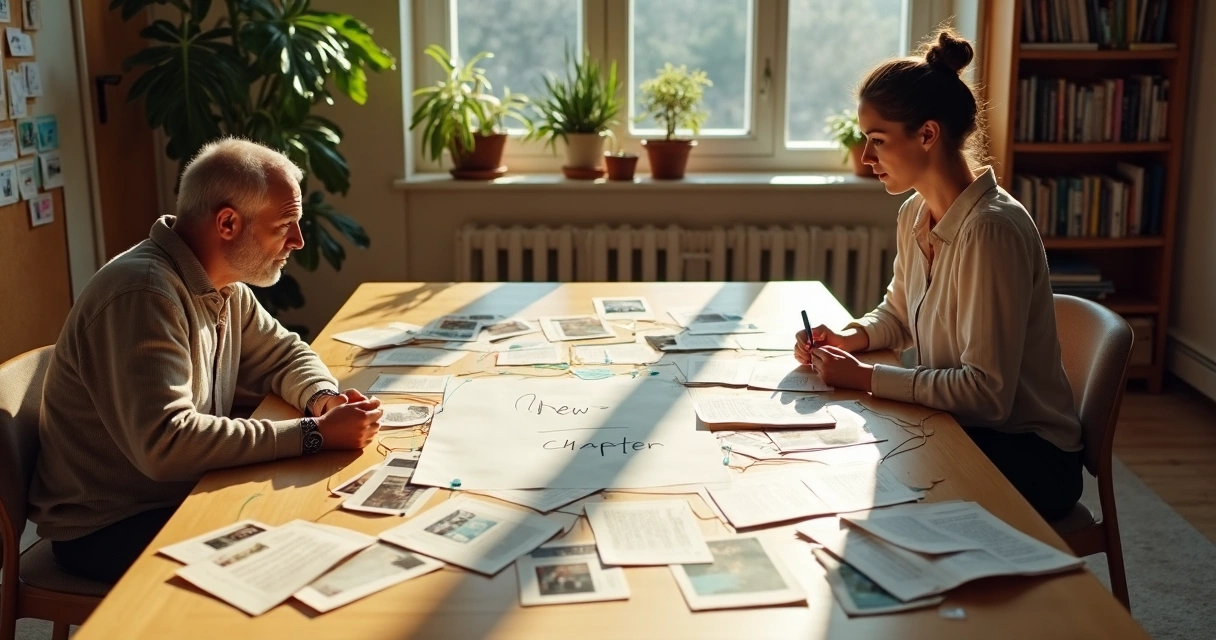

Conflict rarely starts with words alone. In our experience, it starts earlier, inside perception, tension, memory, and unmet needs. By the time people argue, much has already happened within them. This is where Marquesian philosophy offers a different path. It does not treat conflict as a simple clash of opinions. It sees conflict as the expression of inner division, emotional pain, and a lack of integration.
Marquesian philosophy for conflict resolution begins by reading the inner state that feeds the outer problem.
We have seen this in families, teams, and close relationships. Two people speak about one event, but each one reacts to something deeper. One defends dignity. The other protects belonging. One fears rejection. The other fears loss of control. The discussion looks current, but the force behind it is older.
Why conflict becomes hard to solve
Many conflicts do not grow because the issue is too big. They grow because the people involved are reacting from unresolved material. When pain is active, the mind narrows. Listening drops. Defense rises.
A study from Northumbria University on emotion regulation and reconciliation found that patterns such as rumination, situation selection, and cognitive reappraisal were linked to more positive attitudes toward reconciliation in divided communities. We think this matters because conflict resolution is not only about dialogue skills. It is also about how people regulate what they feel before and during dialogue.
That is why Marquesian philosophy asks us to pause before we try to fix the other person. First, we look at the internal field that is shaping our reaction.
Conflict outside reflects conflict inside.
What Marquesian philosophy changes
Instead of asking, “Who is right?” this philosophy often asks different questions:
What pain is active in each person?
What inner split is shaping this reaction?
What truth has not yet been spoken with clarity?
What responsibility is each person avoiding?
This shift changes the tone of the whole process. We stop treating conflict as a battle to win and start seeing it as a field to understand. That does not mean passivity. It means lucidity.
The goal is not to erase disagreement, but to mature the way we hold it.
When we work from this view, conflict can become a place of truth, repair, and ethical growth. Not always quickly. Not always neatly. But often more deeply.

How to apply it in real situations
We like to keep the method clear. In daily life, five steps often help.
Start with inner observation
Before speaking, we ask ourselves what is being touched in us. Is it pride, fear, shame, injustice, abandonment, or the need to be seen? This first step reduces projection.
A manager once said he was angry because his employee was careless. After a few minutes of honest reflection, he saw something else. He was not only angry. He felt disrespected, and that feeling had followed him for years in many settings. The conflict changed shape the moment he saw that.
For deeper reflection on this process, we often connect it with themes of consciousness, because conflict becomes clearer when awareness becomes more honest.
Name the conflict without accusation
After inner observation, we describe the issue in simple language. We speak about facts, effects, and feelings, without turning the other person into the problem.
That can sound like this:
When the deadline changed without notice, we felt confusion and strain.
When that comment was made in public, we felt exposed.
When silence lasted for days, we read it as distance.
This may seem small, but it changes everything. The other person is less likely to defend against a fact than against an attack.
Look for the hidden layer
Visible conflict is often only the top layer. Beneath it, we may find loyalty issues, old wounds, unmet expectations, or silent grief. Marquesian philosophy invites us to ask what deeper movement is asking to be seen.
What hurts most in conflict is often not the event, but the meaning attached to it.
This is where the work of integration becomes practical. A person who can link present tension to older emotional material is less likely to turn every disagreement into a threat.
Bring responsibility back to each side
Healthy conflict resolution does not depend on one side confessing and the other side judging. It asks each person to take ownership of their part. We ask:
What did we assume without checking?
What did we avoid saying at the right time?
What did we express poorly?
What pattern are we repeating?
This step is strong because it restores dignity. People tend to relax when they feel they can be responsible without being humiliated.
End with a reconciled direction
Resolution is not only emotional relief. It also needs a new direction. We define what changes now, what boundary will be respected, and what new agreement both sides can sustain.
In relationships, this may mean new ways of speaking during tension. In teams, it may mean clearer expectations. In leadership, it may mean less reactive decision-making. We often relate this to leadership, because unresolved inner conflict usually shapes outer authority.

Where this approach helps most
We have found that this philosophy works well in places where people do not want a quick patch, but a more honest shift. It can help in:
Couples facing repeating arguments
Families with old emotional charges
Work teams under silent tension
Partnerships damaged by mistrust
Groups trying to restore dialogue after rupture
It is also very useful in relationships, where many people ask for peace but still speak from injury. And for those who want broader material on this topic, a guided search can help connect related themes and practical paths.
What to avoid during the process
Some habits weaken conflict resolution, even when the intention is good. We try to avoid them with care:
Trying to solve the issue while emotionally flooded
Using truth as a weapon
Confusing intensity with honesty
Demanding instant forgiveness
Ignoring the body’s signs of overload
There is a quiet discipline in this work. Sometimes the best first move is not a speech, but a pause. We have learned that a well-timed pause can prevent days of damage.
Conclusion
Marquesian philosophy for conflict resolution teaches us that peace is not built by suppression, fear, or polished language. It is built by inner reconciliation, clear responsibility, and mature dialogue. When we understand the emotional field behind the clash, we stop treating conflict as noise and start hearing its message.
Real resolution happens when truth and emotional maturity meet in the same conversation.
That is why this approach speaks to more than conflict itself. It speaks to the quality of human presence. And when presence changes, relationships, teams, and decisions begin to change as well.
Frequently asked questions
What is Marquesian philosophy for conflict resolution?
It is an approach that sees conflict as an expression of inner imbalance, emotional pain, and relational misunderstanding. Instead of focusing only on the surface issue, it helps us identify the internal reactions and hidden meanings that intensify the disagreement.
How can Marquesian philosophy resolve conflicts?
It resolves conflicts by guiding us through self-observation, honest language, emotional regulation, shared responsibility, and new agreements. This process lowers defensiveness and opens space for clearer and more respectful dialogue.
Is Marquesian philosophy effective in workplaces?
Yes. It can be very effective in workplaces because many professional conflicts involve unspoken expectations, stress, and reactive communication. By helping people understand their internal triggers and speak with clarity, it improves trust and cooperation.
Where can I learn Marquesian conflict resolution?
We suggest learning it through structured educational content, guided reflection, and materials focused on consciousness, integration, relationships, and leadership. A consistent study path helps turn the ideas into lived practice.
What are the key steps involved?
The main steps are to observe the inner reaction, name the conflict without accusation, identify the deeper emotional layer, take responsibility for one’s part, and build a reconciled direction with clear next actions.